
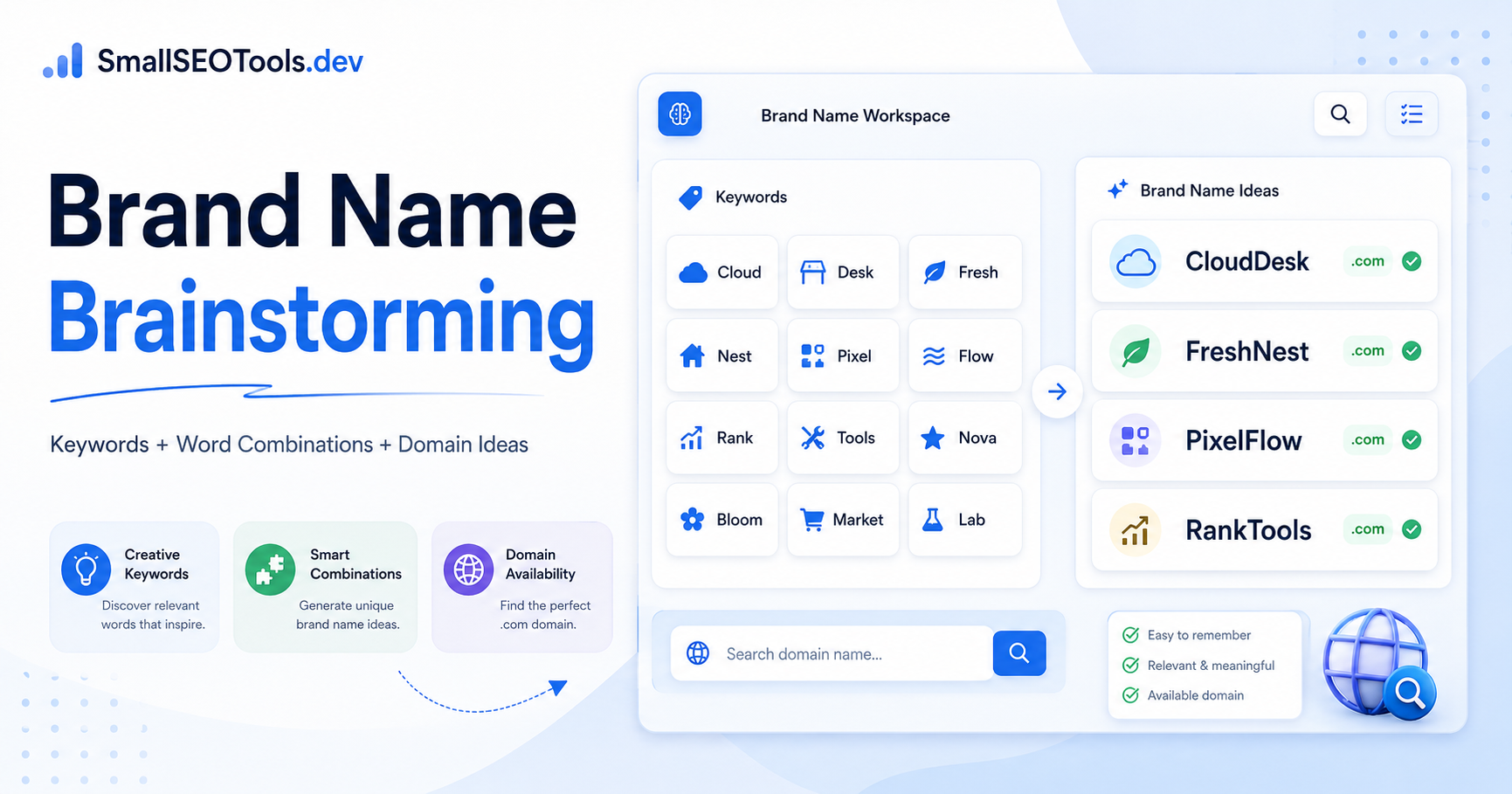
Choosing a brand name feels exciting at first, but it can quickly become frustrating. You may have a good idea, but every name sounds taken, too generic, too long, or too hard to remember. That is where online brainstorming helps.
When you brainstorm brand names online, you can turn raw keywords into stronger name ideas, test word combinations, compare shortlists, and avoid common naming mistakes before you buy a domain or design a logo. The goal is not just to find a name that sounds cool. The goal is to find a name that is clear, memorable, easy to say, and flexible enough to grow with your business.
A tool like the Word Combiner can help you generate combinations quickly, but the best results come from using a clear naming process.
What Does It Mean to Brainstorm Brand Names Online?
Brainstorming brand names online means using digital tools, keyword lists, word combinations, and research to create possible names for a business, product, website, app, course, store, or personal brand.
- Writing down seed keywords
- Combining related words
- Trying different name styles
- Checking spelling and pronunciation
- Comparing name length
- Checking domain ideas
- Looking for social handle availability
- Shortlisting names that fit your brand
Online brainstorming is useful because it gives you more options faster. Instead of staring at a blank page, you can generate a long list of ideas and then filter them down.
Why a Good Brand Name Matters
A strong brand name can help people understand and remember your project. A weak name can make your brand harder to explain, harder to search, or easier to confuse with someone else.
- Easy to remember
- Easy to spell
- Easy to say out loud
- Relevant to your audience
- Different from competitors
- Flexible for future growth
- Short enough for domains and usernames
- Clear enough to share in conversation
A name does not need to explain everything your business does. It should create the right first impression and be easy to build around.
Start With the Right Naming Inputs
Before using a generator or word combiner, collect useful raw material.
Your niche
Examples include skincare, SEO tools, coffee, fitness coaching, handmade jewelry, AI automation, and online courses.
Your audience
Examples include students, small business owners, creators, agencies, parents, gamers, and local customers.
Your main benefit
Examples include faster writing, cleaner skin, better sleep, easier marketing, affordable learning, and simple design.
Your brand personality
Examples include premium, playful, modern, friendly, bold, calm, technical, and minimalist.
Your keywords
Make a list of 20-50 words related to your business. Include simple words, emotional words, problem words, benefit words, and industry words. If your keyword list becomes too long, use the Word Counter to check length and clean the list before combining ideas.
Brand Name Brainstorming Methods
Combine two simple words
This is one of the easiest ways to create name ideas.
- Cloud + Desk = CloudDesk
- Fresh + Nest = FreshNest
- Pixel + Flow = PixelFlow
- Rank + Tools = RankTools
Use the Word Combiner to test different keyword pairs quickly.
Add a prefix or suffix
- Get + Bloom = GetBloom
- Try + Nova = TryNova
- Rank + ly = Rankly
- Text + hub = TextHub
- Market + lab = MarketLab
Use benefit-based names
- ClearWrite
- FastRank
- EasyForms
- BetterNotes
- QuickBrand
Use emotion-based names
- CalmNest
- BrightPath
- HappyCart
- TrustFlow
- BoldSpark
Use invented or blended names
Invented names can feel unique, but they must still be pronounceable. Shopify, Spotify-style blended names, Notion-like abstract names, and short made-up names all show how a name can move beyond plain keywords.
Naming Tip
Do not create names that are impossible to spell or say. A unique name is not useful if people cannot remember it.
Use descriptive names
Descriptive names explain what the brand does. Examples include Small SEO Tools, Email Outreach Desk, Fitness Meal Planner, and Logo Maker Studio. Descriptive names can be easier for users to understand, but they may be harder to make unique.
Brand Name Style Comparison Table
Brand Name Style Comparison
| Name style | Example | Best for | Watch out for |
|---|---|---|---|
| Descriptive | Text Tools Hub | SEO, tools, local services | Can sound generic |
| Combined words | PixelFlow | startups, SaaS, creative brands | May already be taken |
| Benefit-based | ClearWrite | apps, courses, service brands | Can feel too plain |
| Emotion-based | CalmNest | lifestyle, wellness, creators | May not explain the offer |
| Invented | Novexa | startups, apps, products | Hard spelling risk |
| Keyword-based | RankTools | search-focused websites | Can limit future growth |
| Founder name | Sarah Designs | personal brands, studios | Harder to sell or expand |
How to Use a Word Combiner for Brand Names
1. Create keyword groups
Make separate groups for your niche, audience, benefit, and personality.
2. Paste keywords into the Word Combiner
Add one keyword per line or separate them clearly.
3. Generate combinations
Create two-word or short phrase combinations.
4. Remove weak ideas
Delete names that are too long, confusing, hard to pronounce, or off-brand.
5. Format your shortlist
Use the Case Converter to test how names look in title case, lowercase, or brand-style capitalization.
6. Check length and readability
Use the Word Counter to compare name length and avoid overly long names.
7. Check domains and social handles
Before choosing a final name, check whether a matching domain and social usernames are available.
8. Test with real people
Ask a few people to read the name, spell it, and explain what they think it means.
Name Quality Checklist
Brand Name Scoring Checklist
| Question | Why it matters | Pass? |
|---|---|---|
| Is it easy to say? | People should be able to recommend it aloud | Yes/No |
| Is it easy to spell? | Users should find it after hearing it once | Yes/No |
| Is it short enough? | Short names work better for domains and social handles | Yes/No |
| Does it fit the audience? | A playful name may not fit a serious brand | Yes/No |
| Is it different from competitors? | Avoid confusion and weak branding | Yes/No |
| Can it grow with the brand? | Avoid names that are too narrow | Yes/No |
| Is the domain available? | Website setup becomes easier | Yes/No |
| Are social handles available? | Consistent branding helps discovery | Yes/No |
| Does it look good in text? | Logos, headings, and bios need clean formatting | Yes/No |
Common Brand Naming Mistakes to Avoid
- Choosing a name before understanding the audience
- Copying a competitor's naming style too closely
- Making the name too long
- Using confusing spelling
- Using trendy words that may age badly
- Choosing a name that limits future products
- Ignoring domain and social handle availability
- Using words that are hard to pronounce
- Falling in love with the first idea
- Forgetting to check how the name looks in lowercase, title case, and logo-style text
Use the Text Case Formatting Guide to understand how capitalization affects brand names, headings, and social profiles.
Domain and Social Handle Checks
A name may sound perfect, but you still need to check whether people can find it online.
- .com domain availability
- relevant country domain if local
- social media handles
- marketplace usernames
- app names
- competitor names
- trademark databases if the brand will become serious
Important: This article is not legal advice. For serious businesses, consider checking trademarks or asking a qualified professional before investing heavily in a brand name.
How to Shortlist the Best Name Ideas
Use this simple scoring method. Score each name from 1 to 5 for clarity, memorability, spelling, pronunciation, uniqueness, domain or handle potential, audience fit, and future flexibility.
Names that score well across most areas are better than names that only sound clever.
Examples of Brand Name Brainstorming
Example 1: SEO tools website
Seed words: SEO, rank, search, tools, audit, score, keyword, web
- RankTools
- SearchScore
- AuditNest
- KeywordFlow
- WebRankLab
Example 2: handmade candle store
Seed words: glow, wax, calm, scent, home, cozy, flame, mood
- CozyGlow
- CalmFlame
- ScentNest
- GlowMood
- HomeWax Studio
Example 3: online learning brand
Seed words: learn, skill, guide, mentor, academy, growth, path, smart
- SkillPath
- MentorNest
- LearnFlow
- SmartGuide
- GrowthAcademy
Related Tools for Brand Name Brainstorming
A good brand name often starts with messy notes and becomes stronger through cleanup, comparison, and formatting. These tools help you combine words, check length, format names, and create social-ready text for your brand.
Reverse Text Generator
Create playful reversed text for experiments, puzzles, and naming tests.
Open ToolFinal Thoughts
Brainstorming brand names online is not about picking the first idea a generator gives you. It is about creating enough options, filtering them with clear criteria, and choosing a name that real people can remember, spell, and share.
Start with meaningful keywords, combine them in different ways, shortlist the strongest ideas, and check availability before you commit. A simple workflow with the Word Combiner, Case Converter, and Word Counter can help you move from rough ideas to a cleaner, more brandable shortlist.